



Diversity sourcing is a strategic approach to recruitment that involves consciously reaching candidates from underrepresented groups – going beyond traditional channels and patterns. Ethnically and racially diverse organizations achieve up to 35% better financial results, and their teams make decisions that are 80% more effective than homogeneous teams. The article covers seven practical sourcing tactics – from multi-platform recruiting, through X-ray search and inclusive job postings, to CV anonymization and DEI audits. We also show how to ethically leverage AI in recruitment and why 75% of large companies already use AI-powered diversity tools.
In this article, you’ll learn:
- What diverse sourcing in IT is all about?
- What the benefits of workplace diversity are?
- How DEI has evolved from a formality to a strategic KPI?
- The key components of effective diversity and inclusion practices
- Practical techniques for sourcing diverse candidates
- How technology and AI can support inclusion and eliminate bias?
What is diversity sourcing?
Diversity sourcing is a strategic approach to recruitment that focuses on actively reaching candidates from diverse backgrounds including those who are underrepresented in the tech industry. Unlike traditional sourcing, which often (even unintentionally) reinforces existing patterns and biases, sourcing diverse candidates is a conscious effort to build an inclusive and varied talent pipeline.
This process combines recruitment techniques with DEI (Diversity, Equity, Inclusion) practices to support diversity and inclusion in the workplace. It involves using non-traditional sourcing channels, applying inclusive language, collaborating with organizations that promote diversity, and leveraging diversity tools like CV anonymization or AI that helps remove bias in the recruitment process.
The goal of diversity sourcing is to build teams that reflect a broader range of experiences, perspectives, and identities resulting in better alignment with customer needs and greater effectiveness in global business environments.
Why do diversity and inclusion pay off?
Bringing people with different experiences, viewpoints, and identities into your team is far more than a “nice to have.” Strengthening diversity in the workplace leads to tangible business benefits, such as:
- Higher innovation and creativity in diverse teams
- Better understanding of customers and global markets through diversity in recruitment
- Greater employee engagement driven by inclusive hiring practices
- Lower turnover and higher profitability as a result of effective diverse talent acquisition strategies
Diversity sourcing helps build teams that are more adaptable to market shifts and more capable of creating solutions for diverse audiences. As a result, diversity and inclusion become not just ethical imperatives but strategic assets for your organization.
Ethnically and racially diverse organizations outperform their less diverse competitors by as much as 35% in financial results (McKinsey, 2025).
Moreover, diverse teams make decisions that are 80% better than those made by homogeneous teams (People Management).
It’s not just theory – the numbers speak for themselves:
- As many as 74% of millennials believe that companies actively supporting diversity and inclusion are significantly more innovative.
- For 47% of candidates, a company’s DEI (Diversity, Equity, Inclusion) policy is a key factor when choosing an employer.
- Meanwhile, 57% of employees say they’ve experienced barriers in the recruitment process due to identifying characteristics such as gender, age, ethnicity, or identity.
Diversity and inclusion are no longer just branding add-ons – they’ve become essential foundations for building innovative products, making better business decisions, and creating resilient, future-proof strategies.

The evolution of DEI: from formality to measurable business KPI
In the early 21st century, DEI (Diversity, Equity, Inclusion) strategies were often treated as check-the-box formalities driven more by legal compliance or branding concerns than by genuine commitment. In many cases, diversity was reduced to a single slide in a presentation or a mission statement with little impact on day-to-day operations.
Fast forward to 2025, and the picture looks radically different. Diversity and inclusion have become core components of business strategy, especially within global tech giants like Microsoft, Meta, and Google. In these organizations, strengthening diversity in the workplace – particularly at the leadership level is now a clearly defined, measurable KPI.
What’s more, progress on DEI goals is directly tied to executive compensation, highlighting the strategic weight these initiatives now carry. This shift marks a transition from symbolic gestures to meaningful, long-term actions integrated into the DNA of modern organizations.
According to Gartner’s 2025 report, 75% of large companies actively use AI-powered diversity tools that enable both candidate data anonymization and real-time diversity measurement. These technologies play a crucial role in supporting data-driven, unbiased recruitment processes and help organizations track progress toward their DEI goals with greater precision.
As experts emphasize, the future of DEI lies in fully integrating diversity, equity, and inclusion into the DNA of business operations. It’s no longer about performative gestures or one-off initiatives—it’s about authentic, long-term commitments that have a measurable impact on company culture and business outcomes. DEI is becoming a strategic imperative, shaping how organizations attract talent, make decisions, and sustain competitive advantage in a rapidly changing world.
Diverse sourcing – how to overcome key challenges effectively
As of 2025, one of the biggest challenges companies face in the area of DEI is effectively reaching diverse candidates. Many organizations still struggle with systemic barriers that limit access to talent from underrepresented groups. These challenges are further intensified by globalized labor markets, the rise of hybrid work models, and the increasing automation of recruitment processes—which, when poorly designed, can unintentionally reinforce existing biases.
Beyond sourcing, retaining diverse talent has become an equally pressing issue. More companies are investing in inclusive workplace cultures, targeted development programs, and flexible employment models to boost engagement and long-term retention among employees with diverse backgrounds.
Experts agree: successful DEI strategies require more than just wide-reaching recruitment. They must also focus on building environments where diverse professionals have equal opportunities to grow, contribute, and stay. In this context, diversity sourcing becomes part of a broader effort to embed diversity and inclusion into every stage of the employee lifecycle, from attraction and hiring to retention and advancement.
Key elements of effective diversity sourcing
For diversity sourcing to deliver real impact, it must be approached strategically and holistically – integrating people, processes, and technology. Effective sourcing of diverse candidates is not a one-off initiative; it’s a sustained effort embedded into how an organization recruits and operates.
1. Holistic inclusivity
Diversity should never be viewed narrowly through the lens of gender or age alone. A truly inclusive approach considers a wide range of identity factors that shape candidates’ lived experiences. These include race, cultural background, socioeconomic status, sexual orientation, gender identity, level of education, physical ability, and neurodiversity (e.g., individuals on the autism spectrum, those with ADHD or dyslexia).
A diversity sourcing strategy built on this broad definition enables organizations to reach underrepresented talent pools whose perspectives and potential are often overlooked in traditional hiring processes. For example, candidates over the age of 40—despite their deep experience—are frequently undervalued in tech recruitment, yet they bring critical skills and stability to teams.
Implementing a strategy for acquiring diverse talent requires organizations to maintain a clear, up-to-date, and inclusive definition of diversity. This definition should be grounded in a genuine understanding of the needs of all groups – not just the ones most frequently discussed. Only with this comprehensive lens can companies truly strengthen diversity in the workplace and unlock long-term, meaningful outcomes.
2. Data-driven and AI-based strategies
Advanced analytics and artificial intelligence play a key role today in strategies for sourcing diverse talent. With properly selected diversity tools, organizations can continuously identify inequalities in recruitment pipelines, eliminate unconscious biases, and measure the effectiveness of DEI initiatives in real time.
As many as 67% of leaders responsible for diversity and inclusion already use data provided by external vendors, and 75% of large companies have implemented AI-based solutions such as CV anonymization or job ad language analysis for inclusivity. This approach supports effective sourcing of diverse talent and improves the quality of the recruitment process.
However, using artificial intelligence in recruitment effectively requires caution and responsibility. It is crucial to ensure data representativeness so that candidates’ diverse backgrounds are considered in the analysis – as well as ethical algorithm design under human supervision. Only then can AI truly support diversity and inclusion rather than limit them.
Well-designed technologies not only scale sourcing efforts but also help achieve diversity goals more effectively and support the building of diverse, high-potential teams.
3. Training and conscious leadership
Supporting diversity in your organization starts with leadership. It is leaders who have the greatest influence on whether a DEI strategy becomes a real part of company culture or remains just an empty declaration. Conscious leadership is the foundation of fostering diversity in the workplace – both through everyday decisions and the way teams are managed.
Regular training in diversity and inclusion enables managers to better understand the impact of diversity in recruitment and teaches them how to actively support diverse talent within their teams. These efforts help eliminate unconscious bias, create an inclusive work environment, and build diversity sourcing processes based on values rather than assumptions.
Leaders who know and use diversity tools not only build more open and effective teams but also reinforce the long-term diversity strategy within the organization. Real change starts with them – both in the recruitment process and in the overall company culture.
4. Partnerships and collaboration with communities
One of the most effective ways to strengthen diversity within an organization is to build long-term relationships with organizations and communities that support underrepresented groups. Collaborating with foundations, industry initiatives, universities, and networks representing diverse candidates significantly expands your recruitment reach and helps you connect with individuals who are often invisible through traditional sourcing channels.
Organizations such as Women in Tech, IT Girls Foundation, or communities active on platforms like Slack, Discord, GitHub, Reddit, or Facebook gather diverse talent – often passive candidates who may not be actively seeking a new role but are open to conversations when the right opportunity comes along. These types of partnerships enable more effective diverse sourcing and help foster diversity in your team at an operational level.
Working with diversity-focused organizations also allows you to better understand the needs of specific groups, adjust your recruitment language and communication style, and build trust – a key factor in engaging diverse talent. It also offers a real opportunity to shape your employer brand as open, aware, and committed to inclusion in the workplace.
Developing a diverse sourcing strategy cannot rely solely on internal efforts – it also requires proactive outreach and collaboration with diversity organizations working toward a more inclusive job market.
Practical sourcing tactics
Effectively sourcing diverse talent requires concrete actions and proven methods that can be quickly implemented in your recruitment process. Below are practical and impactful tips to help you promote diversity in your hiring:
1. Recruit across multiple platforms
Each community has its preferred communication channels, so limiting yourself to LinkedIn significantly narrows your talent pool. As part of your diverse talent acquisition strategy, use platforms such as GitHub, Reddit, Slack, Discord, Twitter (X), or specialist Facebook groups. These are the places where you’ll find diverse candidates – including passive talent who rarely respond to standard job postings.
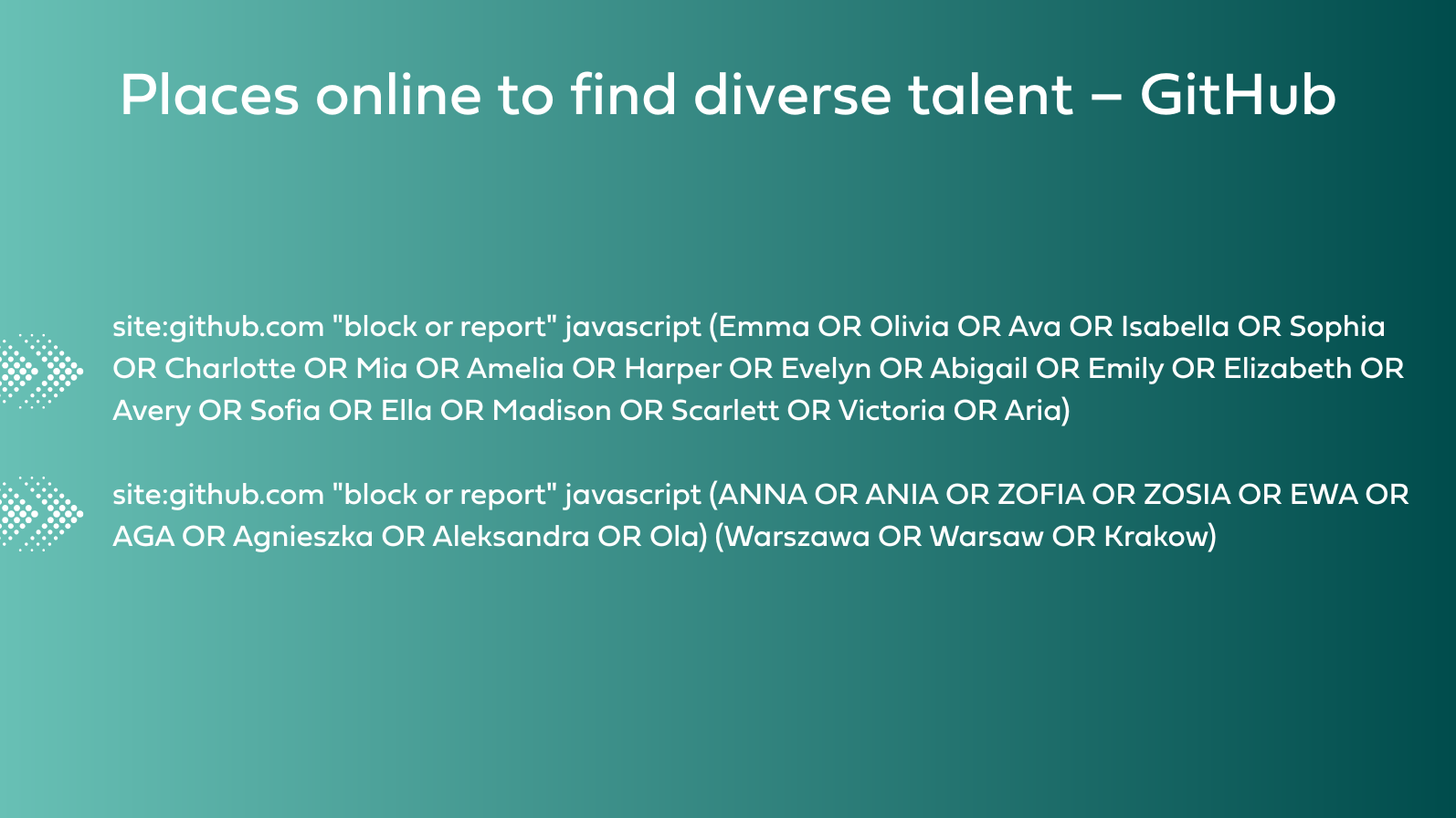
2. Use Advanced Search Techniques (X-ray Search)
Sourcing diverse candidates requires creativity. Use keyword phrases like “she managed,” “women in tech,” or names of community groups (e.g., LGBTQ+ Slack, Women in Data GitHub). It’s also worth including culturally or regionally distinctive first names to help reach candidates from underrepresented groups.
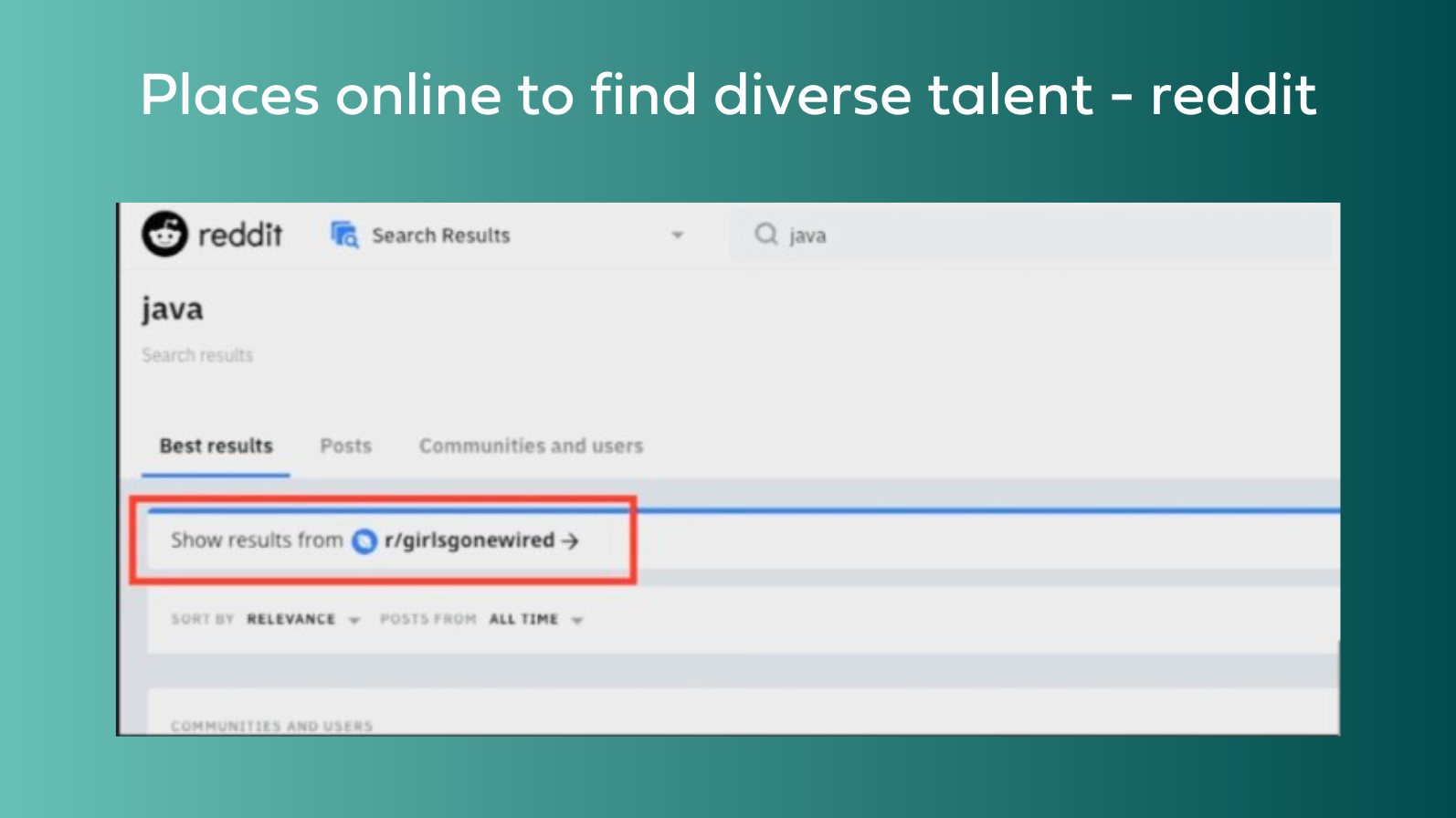
3. Write inclusive job descriptions
The language in your job postings matters. Avoid gendered or age-biased phrases (e.g., “young, dynamic team”) that may discourage diverse skills and talent. Keep your requirements to the absolute must-haves – research shows that women and candidates from underrepresented groups are more likely to apply only if they meet 100% of the listed criteria, whereas men often apply when meeting just 60–70%.
4. Anonymize CV data
Anonymous CV reviews without names, photos, or age information – help reduce unconscious bias and increase the chances of underrepresented candidates progressing in the recruitment process. This is one of the most effective diversity tools for ensuring fair evaluation.
5. Create an inclusive work environment
Hiring diverse talent is just the beginning. Retaining them requires building a workplace that supports LGBTQ+ individuals, people with disabilities, older employees, neurodivergent professionals, and those from different cultural backgrounds. These efforts directly improve engagement, loyalty, and retention.
6. Value potential, not just CVs
Supporting diversity in hiring means shifting perspective – not every candidate follows a traditional career path. Pay attention to soft skills, adaptability, and willingness to learn. Spot candidates with non-linear experiences who can bring unique value to your team.
7. Regularly audit your sourcing practices
Enhancing diversity in your organization is an ongoing process that requires continuous tracking. Analyze your data, measure the effectiveness of DEI campaigns, assess which channels attract the most diverse candidates, and adjust your approach to stay aligned with evolving realities.
By applying these tactics consistently, companies can significantly improve the diversity of their teams—and gain real business and social benefits as a result.
The role of technology and AI – opportunity or risk?
Technology and artificial intelligence offer tremendous opportunities in sourcing diverse talent, but their effectiveness depends on a conscious and ethical approach to implementation. Diversity tools powered by AI can significantly enhance workplace inclusion, yet – if designed carelessly – they may also unintentionally reinforce existing biases. That’s why a responsible strategy for sourcing diverse talent should include the following key principles:
- Data Representativeness – diverse datasets are essential to avoid systematic errors and discrimination against underrepresented candidates. Training algorithms on inclusive and varied data ensures fairer outcomes.
- Model Transparency – the algorithms used in recruitment processes should be transparent and understandable—both to recruitment teams and to candidates. Clarity builds trust and accountability.
- Human Oversight – recruitment decisions should ultimately be made by people, with AI serving as a supportive tool rather than the sole decision-maker. This ensures that empathy, context, and fairness remain central to the process.
When applied responsibly, technology becomes a powerful ally in advancing diversity within your organization, rather than a source of new challenges. In this way, diversity and inclusion can remain strategic assets that drive your company’s growth and innovation.
Diverse sourcing is no longer a trend – it’s a necessity
By 2025, diverse sourcing has evolved from a temporary trend into a crucial, multidimensional strategy driving the growth of modern organizations. Companies that take diversity and inclusion seriously successfully integrate three fundamental pillars:
- Organizational Culture – consciously shaped and rooted in supporting workplace diversity and building an inclusive environment for all potential team members.
- Technology and Data – used to objectively measure the impact of DEI initiatives, eliminate unconscious bias, and streamline the process of sourcing diverse talent.
- Social Responsibility – reflected in a commitment to inclusive recruitment and the active building of diverse teams that better understand global markets and customer needs.
This kind of integrated diverse sourcing strategy doesn’t just support DEI goals – it tangibly increases a company’s competitiveness. It helps attract diverse talent, create better products, and operate more effectively on international markets.

Summary: diversity is demanding, but it pays off
Diverse sourcing is neither a fleeting trend nor a polite branding gesture. It’s a vital organizational capability that requires empathy, courage, and consistent execution. When done intentionally, supporting diversity within your organization leads to real, measurable benefits.
Companies that consistently implement DEI strategies and invest in diversity and inclusion:
- use technology and diversity tools in an ethical and responsible way,
- build authentic employer brands that attract diverse talent and reflect inclusive values,
- achieve tangible business results: greater innovation, smarter strategic and operational decisions, and higher employee retention.
A company’s culture must be ready for diversity, and its brand should reflect those values – this is what attracts talented candidates who go on to build truly effective and innovative teams.
Would you like to learn more about how to effectively implement a diverse talent sourcing strategy in your organization?
We invite you to watch the recording of Team Up Live #9, where we joined forces with Olga Kwiatkowska to discuss the practical aspects of diversity sourcing and building inclusive workplaces. Olga is an experienced DEI expert who successfully implements diversity strategies in international tech companies. During our session, she shared a range of hands-on tips and tools that support the daily work of technical recruiters – especially when it comes to sourcing diverse candidates and creating inclusive recruitment processes.

And if you’d like to talk about the challenges your team is facing or explore ideas to take action – feel free to reach out to us!


 12 MIN


